Eliminate third party, SaaS, & software supply chain risk







Problem
Your TPRM Tool Only Tracks Contracted Vendors


A Third Party Data Holder's Breach Becomes Your Breach
- Password Reuse
60%+ of employees reuse passwords across work email signups - Leaked CredentialsBecome ammunition against your systems
- Unaddressed Risk
No tool in your stack is shrinking this attack surface
The First Tool to Reduce Third Party Data Exposure






Introducing Enterprise Digital Footprint Protection

Works within Major Existing Cyber Solutions
- Operates standalone or at tenant level
- No need to replace any existing services
- Deploys in under 2 Minutes



What Makes Us Unique

- Ideal complement to your security stack with unique, patented technology that identifies shadow data exposure risks from user’s inboxes and removes them using AI-powered automation
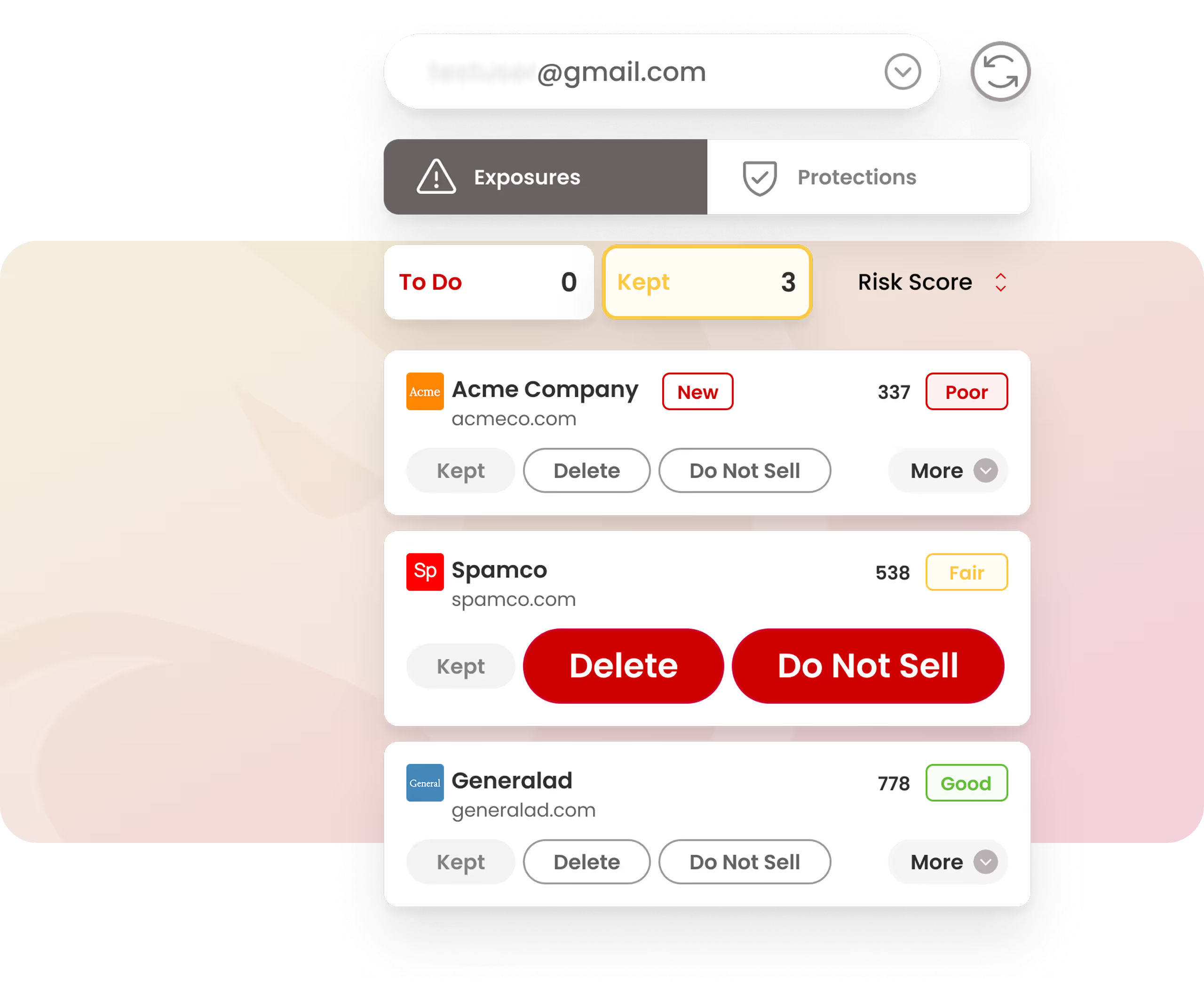
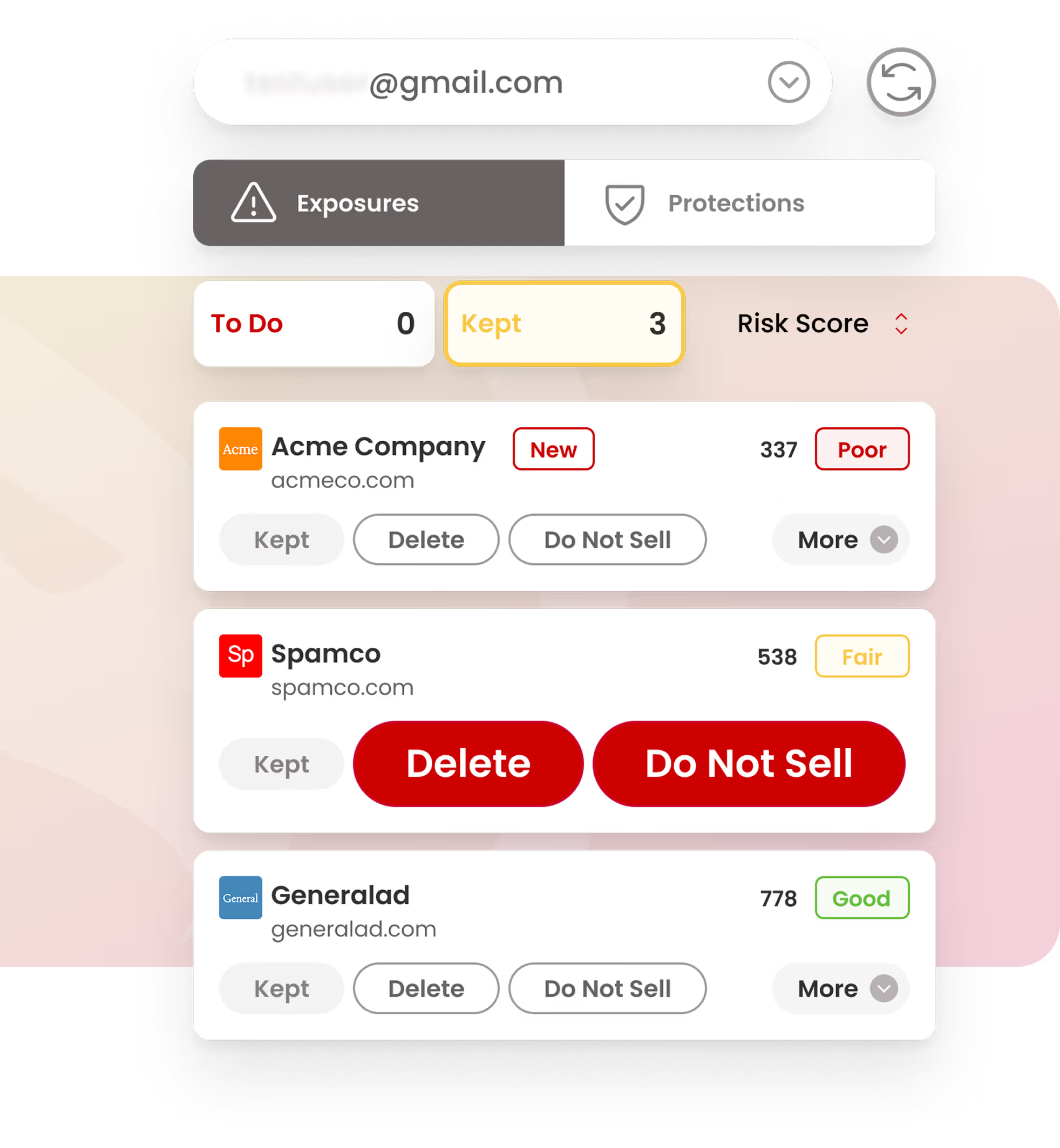
- Proprietary and patented data exposure risk score technology that automatically identifies risks and provides an easy to understand score, like a credit score, but for your organization’s third party exposure risk
- AI-powered automation, billions of proprietary data points, and technology that processes deletions to reduce an organization’s digital footprint by up to 90%
- Designed to work within existing cybersecurity suites
Affordable Pricing

Priced per Employee Per Month
- Exposure monitoring: Biweekly inbox scans to find new exposures
- Data removal: Automated data removal from over 20k possible shadow and third party risks
- Spam reduction: Unsubscribe optout automation that reduces spam and scam emails to employees
- Data broker removal: Data broker removal of both personal and professional data
- Robocall and spam text blocking: Automatically blocks robocalls and texts on company and personal mobiles devices
- Data breach early warning: find out when a vendor had a data breach and which employees were affected before it makes it onto the dark web.
How We Integrate


How it Works
How We Compare
Scroll sideways to see all columns
| Capability | PrivacyHawk Enterprise | Nudge Security | TPRM Platforms | Security Ratings | Shadow SaaS / SSPM | SSE (SWG/CASB/DLP) |
|---|---|---|---|---|---|---|
| Discovery | ||||||
| Assesses vendors you already know about | Coming soon | − | ✓ | ✓ | − | − |
| Discovers vendors you don't know about | ✓ | ✓ | ✕ | ✕ | ✓ | ✓ |
| Discovery via corporate email signal | ✓ | ✓ | ✕ | ✕ | − | ✕ |
| Finds free / freemium signups (no invoice, no SSO) | ✓ | ✓ | ✕ | ✕ | − | − |
| Finds paid / expensed SaaS | ✓ | ✓ | ✕ | ✕ | ✓ | − |
| Per-employee exposure inventory (identity-first) | ✓ | ✓ | ✕ | ✕ | − | − |
| Agentless deployment | ✓ | ✓ | n/a | ✓ | ✓ | ✕ |
| Risk Assessment | ||||||
| Vendor security posture scoring | Coming soon | ✓ | − | ✓ | − | ✓ |
| Questionnaire / assessment workflow | ✕ | ✕ | ✓ | ✕ | ✕ | ✕ |
| Fourth-party / sub-processor mapping | ✕ | ✓ | − | ✓ | − | ✕ |
| Breach / dark web exposure of employee credentials | ✓ | − | ✕ | − | − | − |
| Continuous monitoring vs point-in-time | ✓ | ✓ | − | ✓ | ✓ | ✓ |
| Identity & Access Remediation | ||||||
| OAuth grant inventory | ✓ | ✓ | ✕ | ✕ | ✓ | ✓ |
| OAuth grant revocation | ✓ | ✓ | ✕ | ✕ | ✓ | ✓ |
| Dormant / orphaned (zombie) account detection | ✓ | ✓ | ✕ | ✕ | ✓ | − |
| Revoke access / reset password on unmanaged accounts | ✕ | ✓ | ✕ | ✕ | ✓ | ✕ |
| Offboarding workflow integration | ✕ | ✓ | ✕ | ✕ | ✓ | ✕ |
| Data Remediation — PrivacyHawk Differentiation | ||||||
| Delete the account itself | ✓ | − | ✕ | ✕ | − | ✕ |
| Erase data held by the vendor (DSAR / right to erasure) | ✓ | ✕ | ✕ | ✕ | ✕ | ✕ |
| Saves Money — Cancels Unused Subscriptions | ✓ | ✕ | ✕ | ✕ | ✕ | ✕ |
| Data broker removal for employees | ✓ | ✕ | ✕ | ✕ | ✕ | ✕ |
| Reduces breach blast radius (data no longer exists to leak) | ✓ | ✕ | ✕ | ✕ | ✕ | − |
| Ongoing re-removal / suppression monitoring | ✓ | ✕ | ✕ | ✕ | ✕ | ✕ |
Book Demo or Contact Us
Frequently Asked Questions
How PrivacyHawk compares
What does PrivacyHawk do that other tools don’t?
PrivacyHawk removes employee data exposure instead of just reporting it. We build an inventory of every third party holding data on each employee, using signals from corporate email.
Our AI agents then delete unused accounts, submit data-erasure requests, remove employees from data broker sites, and keep monitoring so the data doesn’t come back. The technology that fills out and submits those requests is patented. Most other tools stop at showing you where the exposure is.
How is PrivacyHawk Enterprise different from shadow SaaS tools like Nudge Security and Grip Security?
PrivacyHawk removes the exposure instead of just managing it. We delete the accounts employees no longer use and send erasure requests so vendors stop holding your employees’ data. If one of those vendors is breached later, there’s nothing of yours to leak.
Nudge Security and Grip Security also find the SaaS accounts employees create with work email, but they focus on securing access to them: revoking access, improving credential hygiene with MFA and SSO, and running offboarding workflows. The data stays with the vendor.
How is PrivacyHawk different from TPRM platforms and security ratings services?
PrivacyHawk finds the vendors your security team doesn’t know about and removes your data from them. We start from employee inboxes to discover the apps and services employees signed up for on their own, then delete unused accounts and the data behind them. Vendor security posture scoring is coming soon.
TPRM platforms and security ratings services only assess vendors you already know about, using questionnaires or outside-in scans, and they can’t remove your data from any vendor.
How is PrivacyHawk Enterprise different from executive protection and data broker removal services?
PrivacyHawk protects the work data most likely to compromise your company: login credentials, customer information, and sensitive company data held by the vendors and apps employees use for work. Nearly half of all breaches (48%) now involve a third party, according to Verizon’s 2026 Data Breach Investigations Report.
PrivacyHawk is designed and priced to cover every employee, not just executives, and personal data broker removal is available as an add-on.
Executive protection services like BlackCloak, and data broker removal services like DeleteMe, Incogni, OneRep, Cloaked, and Optery, only remove personal information from the web. They do nothing about employee work data held by third parties.
How it works
How does PrivacyHawk Enterprise protect employee data where others cannot?
PrivacyHawk’s digital footprint protection technology works with major enterprise email security and workplace productivity suites like Outlook and Google Workspace to identify the work digital footprint of each employee.
On average we find 200 employee data exposures per employee in the organization. For companies with thousands of employees, that is millions of data risks left unaddressed.
Most of these old accounts are no longer used, but have never been cancelled or deleted. So when these third party vendors like various SaaS providers have a breach, all that employee data including login credentials, customer information, and sensitive employee information gets leaked and used to compromise your organization.
Only PrivacyHawk addresses this by using agentic AI to 1) identify the individual digital footprint of each employee and 2) empower them to delete old, unused accounts to reduce the risk of that information being in a breach.
How does data deletion work?
1. PrivacyHawk scans email headers to identify the companies each employee has accounts with.
2. Your security team or the employee reviews the list and approves what to remove. Nothing is sent without approval.
3. Our AI agents submit account-deletion and data-erasure requests to each company, using privacy rights such as GDPR’s right to erasure and U.S. state privacy laws where they apply.
4. PrivacyHawk keeps monitoring for data that reappears and removes it again.
How does PrivacyHawk Enterprise save money?
PrivacyHawk finds and cancels SaaS subscriptions your company is still paying for but no longer uses. Employees often sign up for paid tools with their work email and expense them, and those subscriptions keep renewing after a project ends or someone changes roles.
Because PrivacyHawk discovers paid and expensed accounts alongside free ones, it can flag the unused ones and cancel them. Fewer unused accounts also means fewer places for company data to leak.
Security and privacy
Does PrivacyHawk read employee emails?
No. PrivacyHawk reads email headers only, to identify which companies have sent mail to each employee. It never accesses message bodies or attachments. That tells us which third parties hold some employee data, and we deliberately don’t collect what that data is.
What access does PrivacyHawk need to our Microsoft 365 or Google Workspace tenant?
PrivacyHawk connects through an app your admin approves, listed in both the Google Workspace and Microsoft marketplaces after passing their security reviews. Nothing is installed on employee devices, and no employee passwords are needed. In Google Workspace, PrivacyHawk has read-only access to email metadata and your user directory.
What security protocols does PrivacyHawk Enterprise have in place to protect employee data and inbox access?
PrivacyHawk has a SOC 2 Type 2 report, has completed Google’s CASA Tier 2 security assessment, and is approved for the Google Workspace and Microsoft marketplaces after their security reviews. We’re regularly pen tested, have never failed one, and hold an A+ RiskRecon security score.
PrivacyHawk stores minimal employee information and requires no sensitive login credentials. It works alongside existing email security products such as Cloudflare, Microsoft, Mimecast, Barracuda, Darktrace, CrowdStrike, Proofpoint, and Cisco.
Our SOC 2 report and detailed security documentation are available through your account team, and our Trust & Security page has more detail.
Is our data used to train AI models?
No personal information is ever used to train AI models. Microsoft 365 data is used for training only in fully anonymized form, and Google Workspace data is handled under Google’s API Limited Use requirements.
What happens to our data if we cancel?
Your tenant data is deleted immediately when you ask, revoke PrivacyHawk’s access, or cancel. Backups are purged within 7 days.
Add-on protection
Does PrivacyHawk Enterprise also do personal data removal and protection?
Yes, along with being the only service that protects employee data, PrivacyHawk also offers personal data removal as an optional add-on to protect employees’ privacy and reduce their risk of compromising the company through personal information exposure.
Does PrivacyHawk Enterprise also do dark web monitoring and identity protection?
Yes, PrivacyHawk provides daily dark web monitoring as an optional add-on for all your team members’ personal and work information. Companies may also purchase personal identity protection for their employees’ personal identities that includes restoration and up to $5M in insurance for personal losses resulting from theft or fraud related to their personal information and identity.
Patented Third Party Data Protection Technology

Patented
PrivacyHawk is the only AI-agent that automatically identifies and eliminates personal data exposures. And we have the patents to prove it.

Privacy Score
Privacy Score - your personalized personal data exposure rating.
US Patent Numbers:
US-12164674-B1, US-11960629-B1

AI-Privacy Agent
AI-Privacy Agent - end-to-end opt out and data protection that is self improving and fully automated using AI.
US Patent Numbers:
US-12159324-B1, US-11948219-B1